
It’s always more than music. Always more than me. Always more than everything. It’s this kind of connection.
I want audiences to feel what I’m feeling, what I live through in like an hour. – Marichka
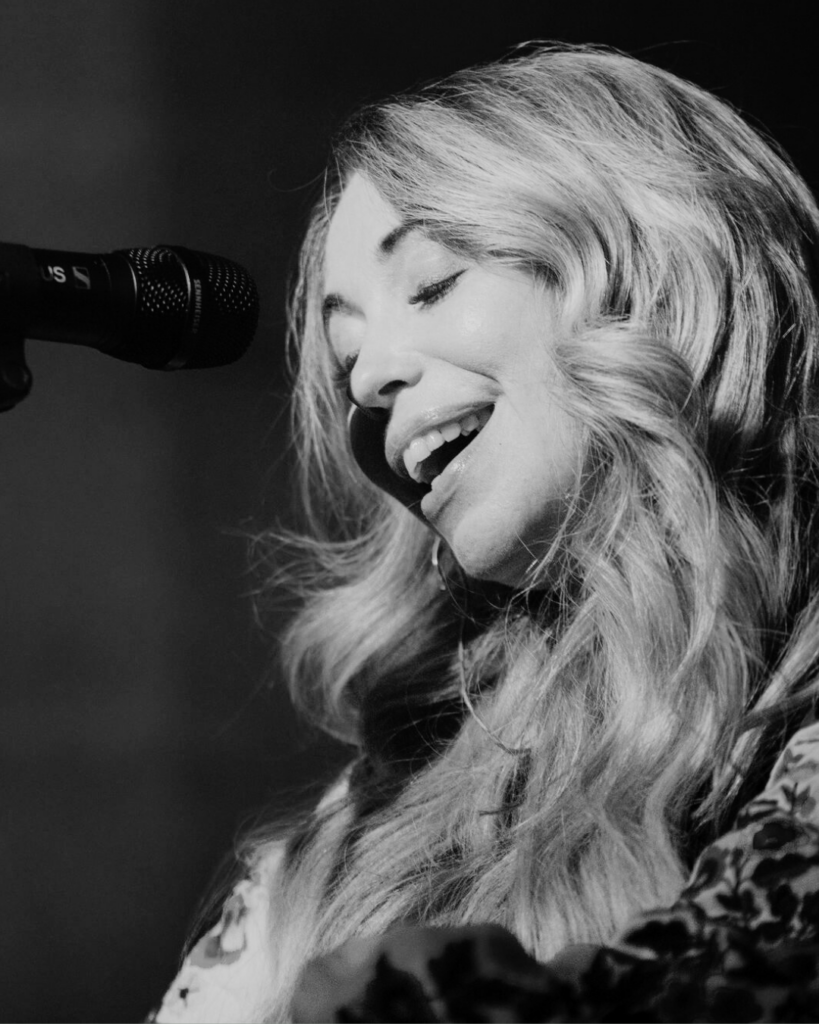
If you’ve been listening to Kultura Rising, you’re familiar with the music of Marichka who graciously allowed us to use her first single from the project Daughters of Donbas: “Songs of Stolen Children” as our theme song.
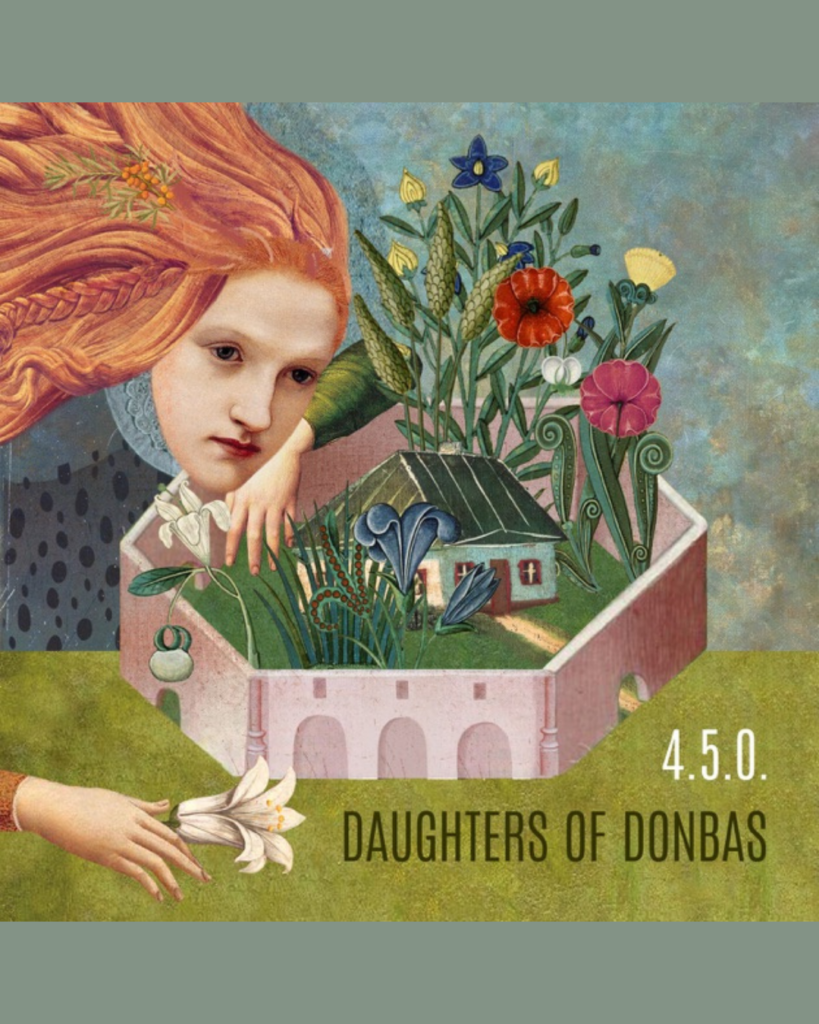
The emotionally charged song is “4.5.0.” and was created in collaboration with acclaimed poet Izdryk. The song reimagines one of his poems through the lens of one of the most devastating aspects of Russia’s war on Ukraine: the abduction of Ukrainian children.
Kultura Rising host, playwright Andrew Kushnir, refers to his guest Marichka in Episode 2 as a female kobzar, or a kobzarina.
The kobzars were these nomadic balladeers who for centuries traveled town to town singing folkloric songs – dumy, they were called – epic poem songs that reminded Ukrainians of their past, particularly as an enslaved people. Kobzari also carried with them the news of the day. They were a kind of cultural internet, connecting communities, and connecting Ukrainians to one another across vast distances.
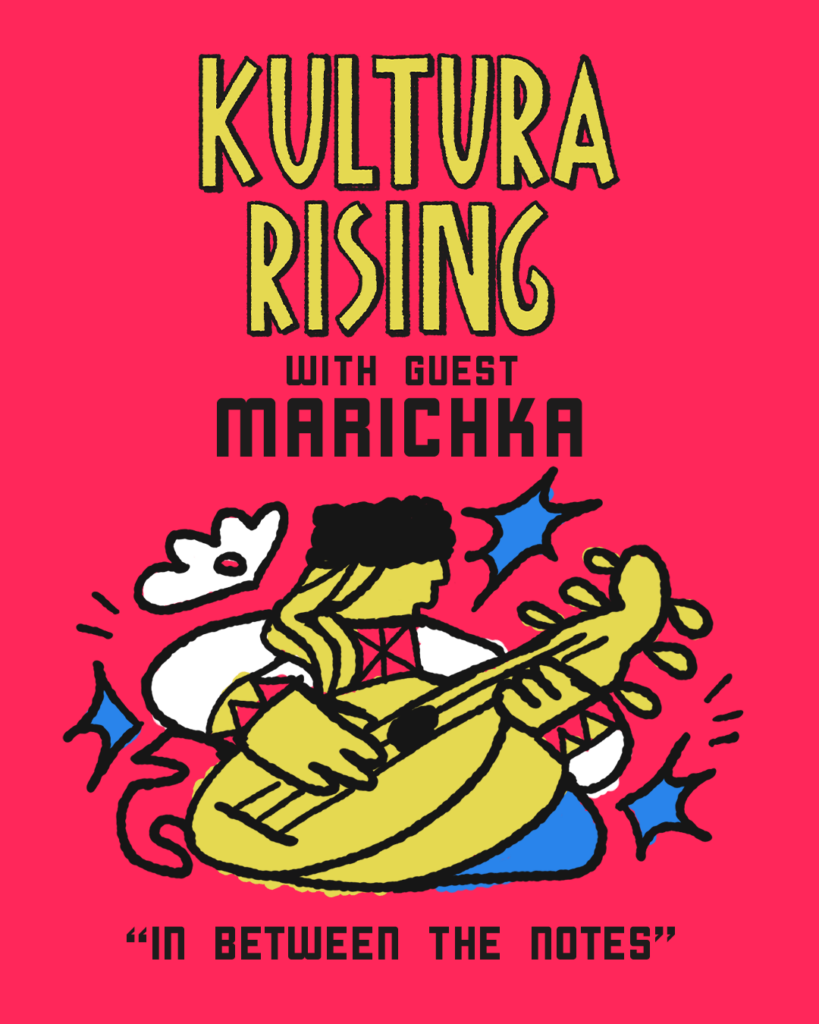
“Marichka has come to braid politics and music herself, and defiantly so. She’s done intricate preservation work – for years she’s studied and collected and disseminated ancestral Ukrainian songs. And she’s also risked her life as an accredited journalist visiting the front lines,” states Kushnir. “Marichka has an immutable calling: to witness and gather and bring into the future what it is to be Ukrainian.”
Marichka’s journey has been far from linear. She graduated from the National Music Academy of Ukraine, specializing in Ethnomusicology, History of Music and Journalism. She pursued her passion in music, believing that art and politics did not mix. Ukraine’s Revolution of Dignity changed all that when from the Maidan stage she witnessed the coffins holding the first young victims of the massacre flowing in a sea of hands.
She refers to this as “a moment that I became a completely different person. I was 38 years old. And I changed my language. I changed my name. I changed my belief on who artists have to be […] because I always truly believed that music, art, it’s out of politics… Then I switched… you have to use your voice to talk about important things, important for your people, for your country.”
Today, Marichka is known as a Ukrainian Canadian singer, ethnomusicologist, activist, war correspondent and producer. Since 2014, she has performed extensively in eastern Ukraine, including frontline and hospital concerts, and later served as a volunteer medic and journalist.
“I remember the moment when I felt it’s not enough just to sing the songs around the world…” Marichka recalls. “[…] I know I can’t go and join the military forces, but I can do something. I can learn something, that I can be helpful in a situation there as a human, physically, I can do something. […] It’s why I joined the medical training. I want to learn how to help, to care [for] the injured bodies. I want to learn it, and I can share it…”
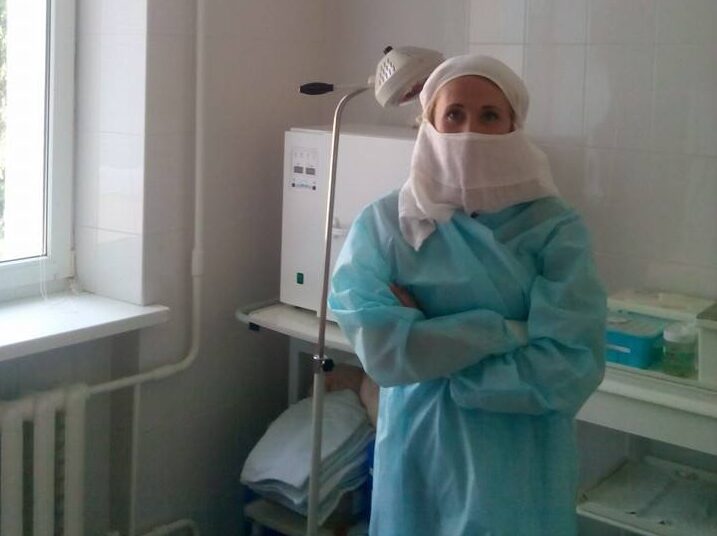
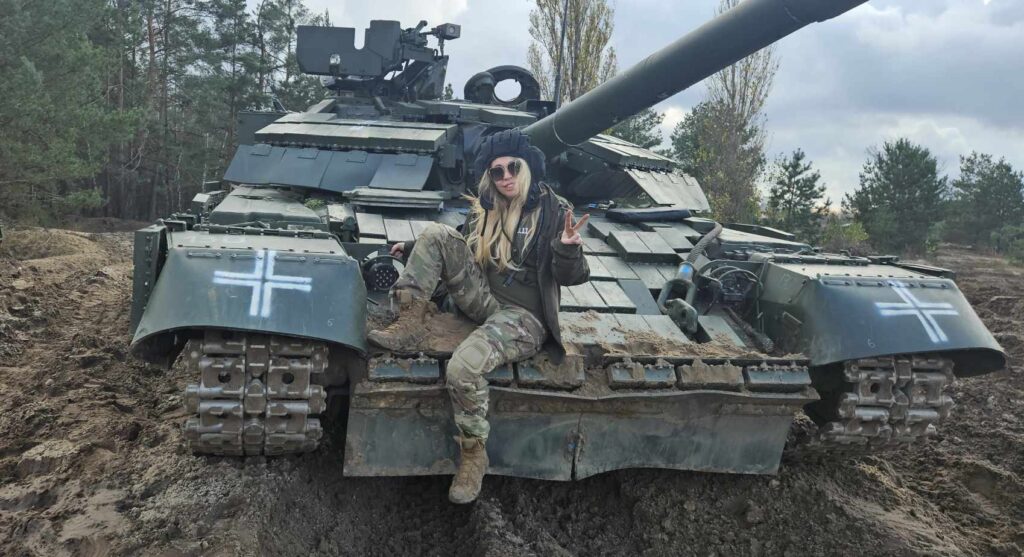
The idea for the song “4.5.0.” came to life in the summer of 2024, on a military training base in Ukraine, where Marichka was embedded as an accredited war journalist with the Armed Forces of Ukraine.
“4.5.0.” borrows its title from the military code used by Ukrainian soldiers to mean “All is calm. All is good.” This simple phrase becomes a mantra – whispered, repeated like a spell. In this song, it becomes a coded prayer to console a stolen child, a loud manifest of hope and resistance – both personal and collective, that they’ll get through this dark, horrific period and will eventually be reunited; that someday, somehow, everything will be 4.5.0. According to official reports, more than 20,000 children have been illegally taken from occupied Ukrainian territories.
In 2025, she launched Daughters of Donbas, a human rights contemporary acoustic project blending art-folk, chamber songwriting, and Ukrainian traditional vocal heritage. The project premiered that year at the Toronto Ukrainian Festival.
As a personal labour of love, Marichka created a digital archive Folk Songs of Ukraine. Accessible on the website www.folk-Ukraine.com, it is Marichka’s way of sharing Ukrainian musical heritage with the world.
“…what is the best way to bring people, to bring the ocean to [the] aquarium and, you know, to make people love, love Ukraine. So, this archive is like my aquarium,” Marichka explains.
Listen to Marichka’s interview with Andrew Kushnir on Kultura Rising, an original podcast of The Shevchenko Foundation. Streaming on your favourite platform or TSF website https://shevchenkofoundation.com/kultura-rising/
Listen to 4.5.0 – Daughters of Donbas (featuring Marichka) https://www.youtube.com/watch?v=Re5OjpAU10o
Explore the digital archive Folk Songs of Ukraine www.folk-ukraine.com